How Floating Dock Stabilizers Keep You Safe (and Stress-Free) All Winter
Key Takeaways
Floating dock stabilizers protect docks and PWCs from ice, wind, and fluctuating water levels.
Winter is the best time to invest in a PWC dock — better pricing, faster delivery, and improved dealer availability.
PolyDock’s ShorePort and HP Series docks are built for strength, safety, and year-round reliability.
Proper stabilization extends the life of your dock and your watercraft.
Why Winter Puts Floating Docks to the Test
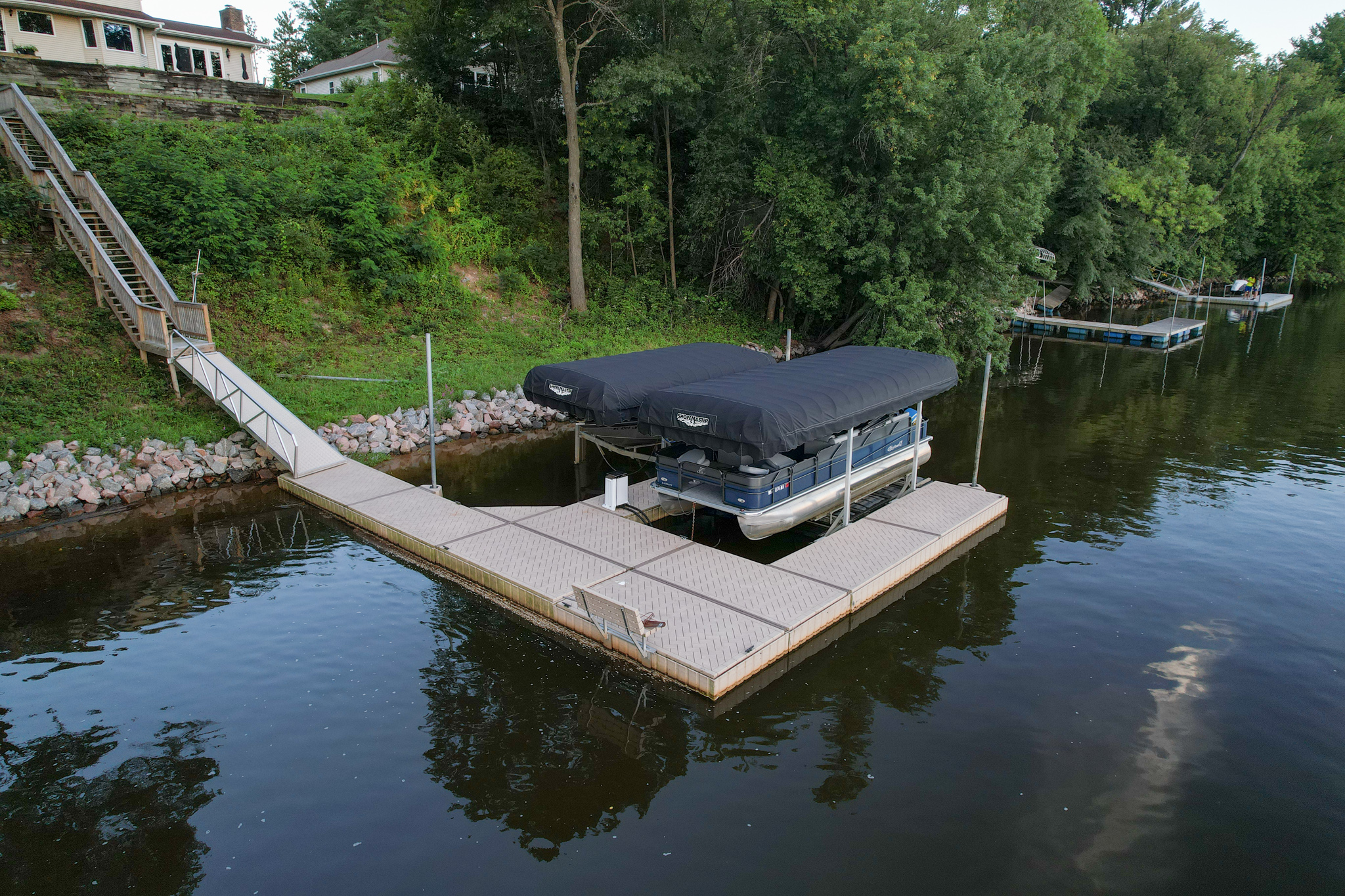
Winter can be a challenging time for waterfront property owners. On top of winterizing boats and personal watercraft (PWC), they must ensure their dock systems can withstand the season’s unpredictable weather conditions. While floating docks have been widely adopted for their adaptability and ease of ownership, winter can still challenge the durability of these docking solutions.
Common Winter Risks for Floating Docks
The US experienced the record for the warmest winter in 2023-2024 with an average temperature of 37.6°F – five and a half degrees above historical norms (NOAA, 2024). While this continuing trend of mild to moderate winters might seem ideal, higher temperatures can also increase the intensity of winter storms, making sleet, freezing rain, and fluctuating water conditions more common (CBS News, 2024).
In northern climates, for instance, freeze-thaw cycles are becoming more erratic, resulting in shifting ice sheets that can push against dock structures. This is especially concerning in the Great Lakes, where large ice floes can exert significant lateral forces on floating docks’ connectors and anchoring systems. Meanwhile, rapid snowmelt in the Rocky Mountain headwaters and Upper Midwest watersheds can trigger sudden rises in lake and river levels, placing additional strain on floating dock systems.
Without the proper reinforcement, these turbulent conditions can cause even the most durable floating docks to shift violently and detach from their anchoring points.
What a Floating Dock Stabilizer Actually Does
At PolyDock, we pride ourselves on designing floating dock systems that withstand harsh marine conditions. We also understand that each dock layout is unique, with each shoreline, lake, river, or ocean bottom varying from location to location. That’s why we offer a diverse collection of anchoring reinforcements to support various installation and waterfront challenges.
Floating dock stabilizers, such as stiff arms, pipe brackets, and chain anchor plates, are designed to minimize lateral movement and prevent the dock from shifting. They act as a buffer, absorbing the shock from high winds and waves and distributing forces evenly to reduce stress on the dock’s structural components and ensure it remains level and balanced even in adverse weather conditions. Having them installed by a certified professional is the best way to keep a floating dock in winter safe.
Benefits of Adding a Stabilizer Kit
Investing in dock anchor reinforcements provides numerous advantages, especially during winter when docks are most vulnerable. If you’re wondering how to make a floating dock more stable, here’s a quick rundown of these anchoring systems to help you get a better idea of their applications and benefits:
Pipe Brackets: These large pipe brackets hold the dock system in place while adapting to tidal fluctuations. Pilings make the floating dock semi-rigid but with enough flex to share the stress along multiple points (FEMA, 2021).
Stand-off Brackets: These provide additional support for connecting PolyDock floating docks or PWC ports from standing docks, seawalls, and decks. They are particularly valuable for reinforcing dock connections in rough water environments.
Chain Anchor Guide Brackets/Plates: This anchoring accessory is perfect for locations with deep water or hard/shale bottom conditions. With no protruding pipes to work around, this anchoring system is also ideal for marinas that moor seaplanes.
Stiff Arms: A stiff arm is an excellent anchoring solution for locations where augering into the lake bottom, river bed, or sea floor is restricted or prohibited. Stiff arms allow you to anchor the floating dock to a seawall, deck, post, or other abutments onshore.
Pile Hoops: PolyDock pile hoops are available in 8-, 10, and 12-inch sizes to fit different piling installations and feature a roller system for smooth operation. Their durable aluminum construction is perfect for floating dock installations in tidal waters.
These floating dock stabilizers help ensure the dock remains steady and secure, reducing the risk of accidents while preventing premature wear on the dock system. More importantly, these reinforcements provide invaluable peace of mind, especially for docks that remain in the water year-round.
Why Winter Is the Smartest Time to Buy a Personal Watercraft Dock
For all the challenges winter poses to waterfront systems, it also presents unique advantages when it comes to purchasing PWC docks and other marine equipment.
Off-Season Savings and Faster Delivery
Manufacturers and retailers often run off-season promotions to clear out inventory, giving prospective buyers access to premium docking solutions at considerably lower prices. Purchasing a jet ski dock in the winter also lets you avoid the delivery and installation delays often associated with the spring and summer rush. By pulling the trigger on a quality PWC dock now, you can quickly and conveniently hit the water as soon as warmer days return.
More Personalized Dealer Support
The slower pace of the offseason also allows the purchasing decision to simmer. With fewer customers vying for attention, dealers have more time to offer detailed consultations and product demonstrations, helping you make a fully informed choice. This enhanced customer service allows you to carefully evaluate your needs, explore available features, and select the perfect docking solution that aligns with your PWC, waterfront setup, and lifestyle.
Top 5 Benefits of Installing a PolyDock PWC Dock
Whether you’re planning to buy a jet ski or are done with the hassles of trailering, here are five reasons why you should invest in a PWC dock:
1. Protect Your Jet Ski from Winter Damage
While PWCs are built for thrilling rides and all-day adventures, they’re not designed to sit idly in the water for extended periods. This danger is even more deceptive in the warmer winters we're experiencing. During a mild 'thaw' day, water can splash into the engine bay or seep into the jet pump. When a 'snap freeze' hits that night, that trapped water can expand with enough force to crack the engine block or manifold, resulting in expensive repairs.
Of course, PWCs are always vulnerable to biofouling, which occurs when algae and other marine organisms accumulate on the hull and other vital components. As these organisms grow, biofouling can lead to increased drag, fuel consumption, and maintenance costs (ECO, 2023). It can also weaken the hull material, potentially causing fiberglass delamination, stress cracks, and fissures. By storing your jet ski on a PWC dock when not in use, you mitigate the risks of winter damage.
2. Launch Easily, Even Solo
Traditional methods of launching and docking jet skis can be quite cumbersome. The hassles of constant trailering often force owners to leave their PWCs sitting in the water for extended periods. With a dedicated platform, you don’t need to plan ahead or deal with a time-consuming and tedious launching process.
Premium PWC docks from PolyDock and HydroHoist feature a convenient drive-on design, allowing riders to kick off the platform and into adventure on a whim. Simply step onto the platform, prep the PWC, and you’re ready to enjoy the water. When you’re done, a gentle twist of the throttle gets you back on, securing the PWC from the elements and potential impact damage.
3. Own It, Don’t Babysit It
Waterfront Brands’ drive-on PWC docks are constructed from rotationally molded polyethylene. Rotational molding is an innovative production process that results in a seamless structure with uniform wall thickness, allowing it to absorb shocks and stresses where they occur the most (RotoMold USA, n.d.). In addition to its exceptional durability, rotomolded polyethylene is highly resistant to UV rays, abrasion, and corrosion, making it the ideal base for a reliable, maintenance-free docking solution.
4. Adapt to Any Setup
Our PWC docks are the epitome of versatility, seamlessly integrating with diverse waterfront environments, personal watercraft models, and dock setups. With multiple mooring points (from the sides and the front), they can be attached to any docking system or used as a standalone docking station. Meanwhile, the adjustable roller supports accommodate various hull sizes and designs to ensure a secure and seamless fit for any PWC.
5. Protect Your Investment’s Resale Value
Investing in a PWC dock is a smart move for preserving the resale value of your jet ski. By keeping your PWC away from harmful elements, these docking solutions mitigate biofouling and hull degradation, which could diminish the vessel’s aesthetic appeal and performance over time. Should you decide to sell or trade in your PWC, its pristine condition will translate into higher resale value, helping ensure you get the most out of your investment.
Check out our blog on how to protect boats in winter to learn more about preserving your waterfront assets.
Comparing PolyDock PWC Dock Options
Waterfront Brands offers a family of PWC docks with varying capacities to protect personal watercraft of all sizes:
ShorePort — Lightweight and Reliable
While the ShorePort is one of the lightest docking systems on the market, its standard capacity of 1,150 lbs. can easily support most PWCs. It also features adjustable polyurethane rollers to accommodate various hull styles and facilitate smooth launching and loading.
HP Extreme — Balanced Performance
This mid-range offering measures 162” x 58” and has a capacity of up to 1,625 lbs. Like all our PWC docks, it boasts ultra-tough polyethylene construction with expanded polystyrene (EPS) marine foam for increased strength and leak elimination. In addition to its adjustable rollers, the HP Extreme features stainless steel roller axles for enhanced durability.
HP Epic — Maximum Stability and Space
With its wider walkways and longer design, the HP Epic provides the stability required by today’s larger PWCs. It also features our patented “air pillow” bow bumper for the keel, adjustable, dual in-line roller support, and stainless steel roller axles for enhanced protection, compatibility, and strength.
You can use stiff arms to anchor PWC docks to a seawall, deck, post, or onshore abutments. Meanwhile, flexi-hinge mounts are available for connecting PWC docks to existing dock systems.
How to Choose the Right Dock System for Your PWC
We designed our PWC docks to accommodate most modern PWCs. For reference, the average jet ski weighs around 850 lbs, with lighter models like the Yamaha SuperJet coming in at around 306 lbs. On the heavier side of the spectrum, the Kawasaki Ultra 310LX weighs in at around 1,073 lbs (Best Boat Report, 2021). This means that even the standard ShorePort can comfortably support most jet ski models.
That said, here are some considerations to take into account when making your choice:
Step 1: Know Your Water Conditions
For bodies of water with variable water levels (like tidal rivers, coastal areas, or reservoirs), pipe brackets or pile hoops are the ideal solution. These attachments allow the PWC port to slide vertically on a post or piling, so it rises and falls safely with the water. However, in areas with deep water, a hard rocky bottom (where pipes can't be driven), or extreme rough-water conditions, a heavy-duty stiff-arm kit is the optimal anchoring solution. This creates a robust, hinged connection to a fixed dock or seawall.
For deep-water applications far from shore, a chain anchor plate system can be used to secure the port with a deadweight anchor.
Step 2: Match Weight and Layout
Make sure the PWC dock is rated to support the watercraft’s dimensions, hull design, and fully loaded weight, including all the gear and equipment it usually carries. You also want a platform with ample walkways so you can safely mount and dismount the ski and perform routine maintenance.
Step 3: Add Safety Enhancements
For safer dock-to-shore transitions, consider adding ramps, gangways, and handrails to your waterfront setup. In addition to facilitating logistics for all your waterfront activities, these safety enhancements also enable access for those with mobility issues.
Ready for a Safer, Smarter Winter Dock Setup?
Get a winter-ready dock system with PolyDock stabilizers. Use the dealer locator tool below to get a list of authorized PolyDock dealers near you. You can also call our Ferguson, MN headquarters at (800) 328-8945 to discuss your requirements and find the ideal waterfront solutions for your unique needs.
FAQs
Do I need to remove my floating dock for winter?
If your waters experience freezing temperatures, we recommend removing or relocating the dock to prevent ice damage. Expanding ice sheets can push against the dock, stressing connectors and floats.
How do stabilizers protect against ice damage?
Stabilizers add rigidity and balance to floating docks, reducing excessive movement during freeze–thaw cycles. By distributing stress more evenly across the structure, they help prevent twisting, shifting, or joint failure caused by ice pressure. This makes the dock more resilient in harsh winter conditions.
Can I install a stabilizer on an existing PolyDock?
Absolutely. We offer several anchoring systems, connectors, and stabilizers for our floating dock systems and PWC ports to accommodate unique installation and environmental requirements.
References:
National Oceanic and Atmospheric Administration (March 8, 2024). The U.S. had its warmest winter on record
CBS News (November 2024). How are U.S. winters permanently changing?
Federal Emergency Management Agency (February 11, 2021). Floating Docks Prevent Severe Damage to Boats During Hurricanes
RotoMold USA (n.d.). What is Rotational Molding?
Best Boat Report (May 6, 2021). How Much Do Jet Skis Weigh?


