How Are PolyDock Systems Anchored?
Key Takeaways
A secure and reliable anchoring system is the foundation of long-term dock performance and safety.
The optimal anchoring system largely depends on the water depth, prevailing conditions, shoreline type, local regulations, and how you use your dock.
PolyDock offers five primary anchoring systems: pipe brackets, chain anchor guides, chain anchor plates, stiff arm anchoring, and pile guides.
Without a secure anchoring configuration, even the most durable dock system is vulnerable to drifting, collisions, and instability, effectively compromising the safety of the structure and the people using it. The appropriate anchoring solution keeps your dock where it should be – aligned, level, and secure – through variable water conditions.
As an industry leader across North America, PolyDock’s floating dock systems are synonymous with superior construction, versatility, and ease of ownership. For decades, our team has pushed the boundaries of what a floating dock could be so waterfront enthusiasts can do more of what they love on the water. Below, we walk you through the essentials of floating dock anchoring solutions and PolyDock’s unique solutions for securing our innovative dock system.
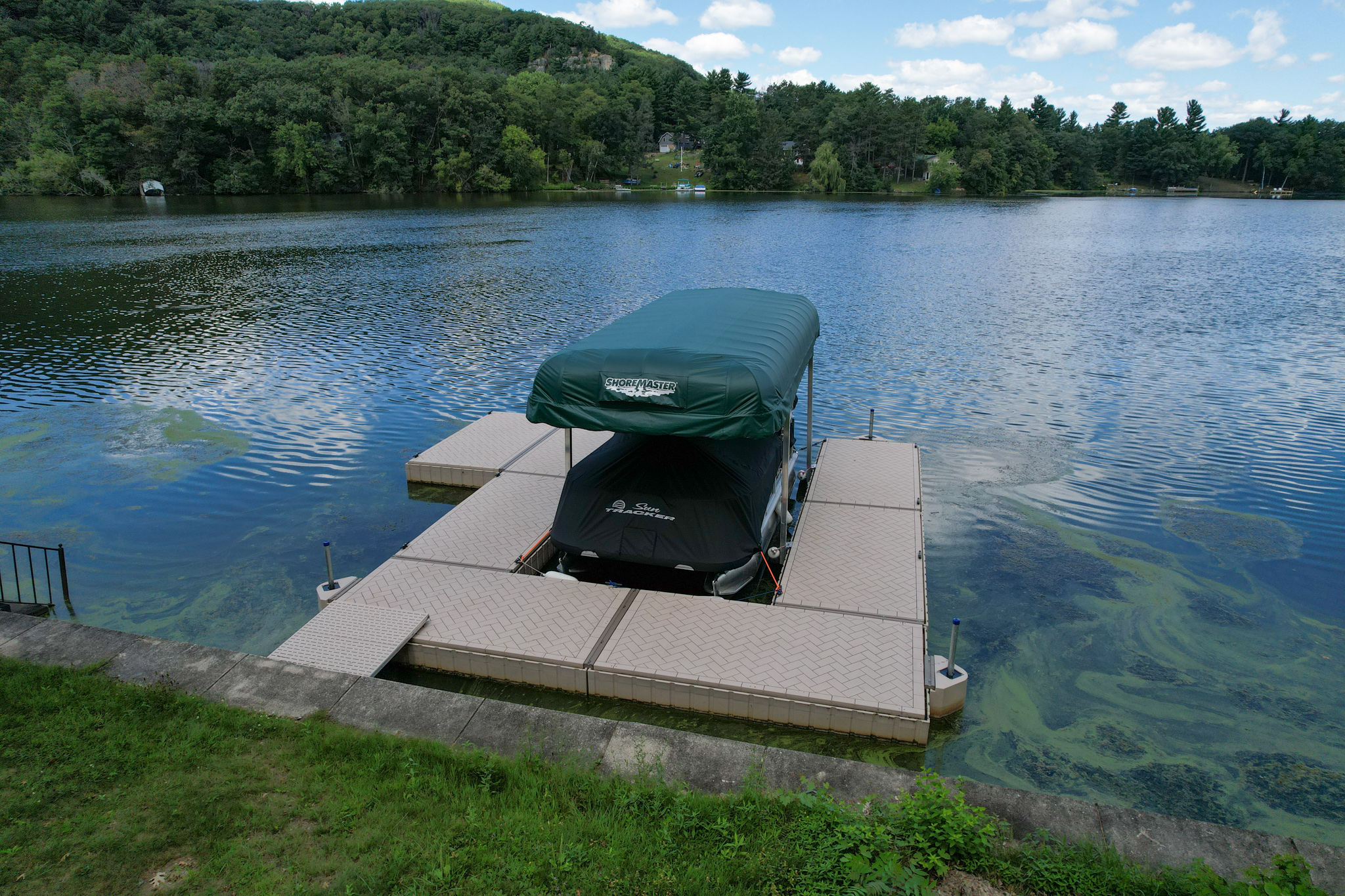
Factors to Consider Before Choosing an Anchoring System
Securely anchoring a floating dock requires a nuanced understanding of your waterfront’s unique conditions, including:
Water Depth and Fluctuations: Among the most important factors to consider are the water depth, whether it fluctuates, and by how much. These determine the optimal anchoring solution and the amount of slack and vertical movement it should provide. For instance, areas with significant tidal or seasonal water level fluctuations typically benefit from flexible anchoring systems like cable anchors or pole and sleeve systems.
Bottom Composition: The shoreline’s bottom composition (sandy, muddy, or rocky) largely dictates which anchors work best. For example, mushroom anchors are often used for soft, muddy bottoms, whereas rocky substrates require more robust solutions, such as heavy concrete blocks or specialized rock anchors.
Waterfront Conditions: Wave action, wind exposure, boat traffic, and current strength all impact the type of anchoring system required. Under these forces, soft or silty substrates may shift under pressure, while rocky or compacted beds offer more resistance.
Dock Size and Configuration: Larger dock layouts require more robust stabilizers to handle the increased weight and surface area. For instance, PolyDock stiff arm kits provide lateral support for larger docks, while anchoring brackets are ideal for securing docks in deeper or more turbulent waters.
Regulatory and Environmental Considerations: Always check with local authorities for relevant local, state, or federal regulations related to shoreline alteration, navigable waters, and protected habitats. These guidelines may restrict allowed anchor types, chain lengths, or seabed disturbance methods.
We recommend consulting authorized dock dealers and installers when building a dock on a lake, as they have an intimate knowledge of which anchoring systems work best in local waters and understand the nuances of navigating regulatory requirements.
Anchoring Essentials: Components You’ll Need
Regardless of the anchoring method, most systems share the following core components:
Anchor Blocks: These are the weights that hold your dock in place. While 1’x1’x1’ concrete blocks (typically 150–600 lbs depending on site exposure) are widely considered the gold standard, alternative materials may be required in regulated or environmentally sensitive areas. Larger assemblies may be needed at dock corners or midpoints, especially in high-traffic or tidal zones.
Anchor Chains: Galvanized or stainless steel chains connect the dock to the anchors. For most residential docks, a ¼" to ⅜" chain offers sufficient tensile strength. In saltwater environments, we recommend using marine-grade stainless steel to mitigate corrosion and reduce long-term maintenance costs.
Hardware: This includes heavy-duty dock brackets, guides, eyebolts, shackles, and quicklinks. A typical setup may require 12–18 connection points, depending on dock size and anchoring layout.
For added safety and stability, we recommend using hardware rated for at least 1.5 times your dock’s fully loaded weight, including all the gear, equipment, and dock accessories it typically holds. This helps ensure your system remains secure under dynamic loads and shifting conditions.
Minimum Specs for Most Waterfronts
Chain Diameter: 3/8"–1/2" galvanized or stainless steel
Anchor Block Weight: 200–400 lbs per corner (increase for deeper or windier areas)
Eyebolts/Links: Rated for ≥ 1,000 lbs working load
Inspection interval: Every 6 months (more frequently in salt or brackish water)
Visual Diagram of a Typical Setup
Imagine a rectangular PolyDock section floating on the water surface. At each corner:
Pipe Brackets or Chain Plates connect the dock to underwater chains or posts.
Chains descend diagonally toward the lakebed, where concrete anchor blocks rest.
A stiff arm may extend from the shore to the nearest dock corner for lateral stability.
In deeper installations, pile guides slide vertically along fixed pilings to allow for vertical movement due to fluctuating water levels.
PolyDock Anchoring Options Explained
At PolyDock, we pride ourselves on designing floating dock systems that withstand harsh marine conditions (Brinson Marine, 2023). We also understand that each dock layout is unique, with each shoreline, lake, river, or ocean bottom varying from location to location. That’s why we offer a diverse collection of anchoring reinforcements to support various installation and waterfront challenges.
Here’s a rundown of these anchoring solutions to help you get a better idea of their applications and benefits:
Pipe Brackets (Shallow Water Stability)
Pipe brackets mount anywhere along the perimeter of the PolyDock system, securing the dock to vertical pipes driven into the lakebed. This allows the dock to slide vertically along the pipes, easily adjusting to water level changes while maintaining stability and alignment. Pipe brackets are ideal for anchoring PolyDock in calm, shallow waters.
They work with 2” schedule 40 galvanized pipes and come in two sizes (large and medium) to accommodate different installation requirements.
Best for: Small lakes, ponds, protected bays, and calm rivers.
Pros: Cost-effective, simple to install, provides excellent stability in calm conditions.
Cons: Not suitable for deep water, hard/rocky bottoms, or areas with significant wave action.
Chain Anchor Guides (Deep Water Strength)
The chain anchor guide bracket is PolyDock’s anchoring solution for use in deep water or on impenetrable lake bottoms. This system combines a pipe bracket with a galvanized steel tube insert. The anchor chain runs through this tube and is locked into a key slot, providing a secure, adjustable connection point.
With no protruding pipes to work around, this anchoring system is also ideal for marinas that moor seaplanes and floating areas.
Best for: Deep or fluctuating water levels (up to 15 feet) where using pipes isn’t possible.
Pros: Flexible, reliable, and adaptable to varying depths.
Cons: Slightly more complex setup; chain wear requires occasional inspection.
Chain Anchor Plates (Most Popular Option)
Our most versatile and popular anchoring method, this lighter-duty plate attaches directly to the dock and features a machined key slot that allows the anchor chain to be easily adjusted and locked in place. Chain anchor plates are perfect for locations with deep water or hard/shale bottom conditions. The plates require 6” accessory connectors (sold separately) to attach to PolyDock.
Best for: A wide range of water depths and conditions, from residential docks to light commercial use.
Pros: Cost-effective, highly versatile, and easy to install and adjust.
Cons: May not be sufficient for more demanding applications.
Stiff Arm Anchoring (Shore-Based Security)
Our stiff arms allow owners to anchor their PolyDock (or ShorePort) to a seawall, deck, post, or any onshore abutment. They feature rigid steel arms with pivot joints, allowing the dock to rise and fall with water levels while being secured at a fixed distance from the shore.
We offer light- and heavy-duty stiff arms for different installation requirements. Both work with galvanized pipes (sold separately).
Best for: Properties with seawalls, reinforced shorelines, or riverbanks. Ideal solution or areas where bottom anchoring is prohibited.
Pros: Eliminates the need for underwater anchors, making seasonal removal easier.
Cons: Requires a solid, stable shoreline structure for mounting.
Pile Guides (Permanent Installations)
Pile guides allow the dock to slide vertically along fixed pilings. This is the most robust solution for marinas, commercial docks, and areas with exposure or high traffic.
Best for: Large-scale or commercial applications that require the utmost stability.
Pros: The most durable and stable anchoring method available, long-lasting for permanent installations.
Cons: Highest initial cost, requires professional piling installation.
Anchoring Option | Ideal Water Depth | Stability | Maintenance Requirements | Relative Cost |
Pipe Brackets | 2 to 6 feet | Moderate | Low | $ |
Chain Anchor Guides | Up to 15 feet | Good | Moderate | $$ |
Chain Anchor Plates | Up to 15 feet | Moderate | Low | $$ |
Stiff Arms | Shore-based | Good to Excellent | Low | $$ |
Pile Guides | 3 to 10 feet | Excellent | Low | $$$ |
Maintenance & Safety Checks for Anchoring Systems
As with nearly any metal components in the water, your anchoring system must be regularly inspected for signs of rust, biological growth, and other potential damage. This helps mitigate premature wear and ensures safety for all dock users.
Seasonal Inspection Checklist
Spring: Check chains, eyebolts, and brackets for rust or wear. Tighten loose fittings and confirm that anchor blocks remain properly positioned.
Mid-Summer: Conduct a hands-on inspection of all connection points. Chain tension should allow for natural dock movement without excessive slack. Keep an eye out for signs of abrasion or stress at hardware junctions.
Fall: This is the ideal time to clean off marine growth from chains and fittings and identify any components that need to be replaced before the next season. If removing the dock for the winter, clean components thoroughly before storing them indoors in a dry, climate-controlled space to prevent corrosion.
Signs It’s Time to Replace Components
Visible thinning or deep pitting from rust on chains or shackles.
Deformed or stretched chain links or connection hardware.
Dock movement feels excessive during wind or wave action.
Anchors no longer hold position during fluctuating water levels.
When to Call a Professional
If you notice significant shifting, leaning, or are unsure of the condition of your floating dock anchor, contact your PolyDock dealer for an on-site assessment. Authorized dealers and certified marine contractors possess the expertise to diagnose issues and perform the necessary repairs safely using manufacturer-approved parts and methods.
Choosing the Right System for Your Waterfront
Each waterfront presents unique challenges. The best anchoring solution often combines multiple systems. To help determine the optimal anchoring configuration:
Measure your average and maximum water depths.
Note exposure to waves and wind.
Assess shoreline firmness and slope.
Ultimately, the best way to guarantee a safe and reliable anchoring system is with a professional assessment. Authorized PolyDock dealers in your area understand the unique local conditions, allowing them to recommend the perfect solution for your layout, shoreline, and waterfront lifestyle. Use the dealer locator tool below to get a list of authorized PolyDock dealers near you.
Next Steps
A secure and reliable anchoring system is the foundation of long-term dock performance and safety. To find the right system for your waterfront, contact an authorized PolyDock dealer and get expert guidance tailored to your site.
FAQs: Dock Anchoring Questions Answered
What’s the best anchoring method for fluctuating water levels?
All PolyDock anchoring solutions are designed to perform in areas with fluctuating water levels. The best anchoring method is one that’s matched to your site’s depth range, substrate, and seasonal water variation.
Can one system handle both residential and commercial docks?
Yes. We offer heavy-duty versions of our pipe brackets and stiff arms to accommodate different installation requirements. Always consult with your dock manufacturer or installer to ensure the system meets or exceeds local codes and performance demands.
How often should anchors be replaced?
The anchors themselves (concrete blocks, augers) can last for decades. The components that require more frequent inspection and replacement are the chains and metal hardware, which may need to be replaced every 5-10 years, depending on water conditions and dock usage.
Do I need a permit to install dock anchors?
This depends on your local regulations. Many jurisdictions require permits for any new dock installation, including the anchoring system (Breezy Permits, 2023). Always check with your local building authority, environmental agency, or lake association before commencing a waterfront project.
What’s the difference between chain anchor plates vs. guides?
A chain anchor plate is a lighter-duty, versatile plate that bolts to the dock for the chain to connect to. A chain anchor guide is a more heavy-duty system where the chain passes through a protective metal tube, offering more durability and security for demanding applications.
References:
Brinson Marine (2023). Looking for Floating Dock? Why ShoreMaster Polydock might be the fit for you!
Breezy Permits (October 5, 2023). List of 9 common requirements to obtain a permit for a dock, seawall, or boat-lift in Palm Beach County


