Pile Hoops (8", 10", 12")
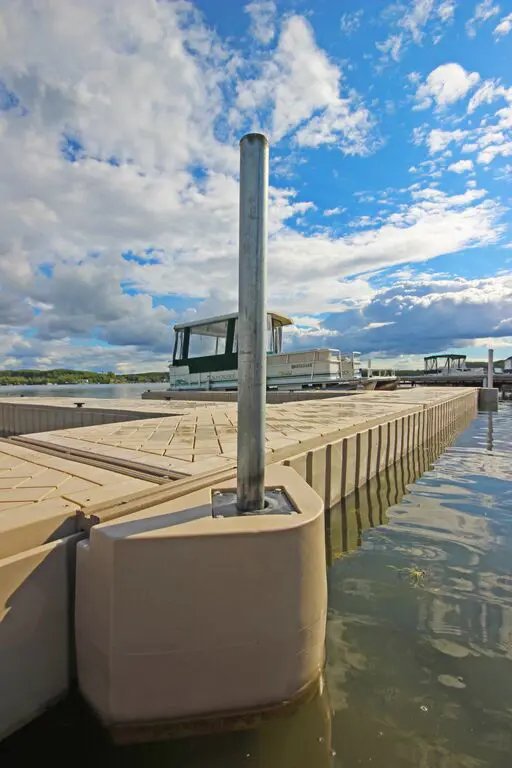
Heavy-duty aluminum with roller system; perfect for marinas and tidal use.
Anchoring Option | Best For | Ideal Use Cases |
Pipe Brackets | Calm or fluctuating water | Residential docks, ponds, rivers, small lakes |
Pile Hoops | Tidal environments, heavy traffic | Marinas, resorts, municipal waterfronts |
Chain Anchor Plate | Deep water or hard bottoms | Seaplanes, floatplanes, shale bottom |
Stiff Arm | Seawalls or restricted bottoms | Residential seawalls, commercial projects |
Flexi-Hinge | Attaching to existing docks | ShorePort or PolyDock connected to wood/metal docks |
Piling & Pipe Anchors
Pile Hoops (8", 10", 12") – Heavy-duty aluminum with roller system; perfect for marinas and tidal use.
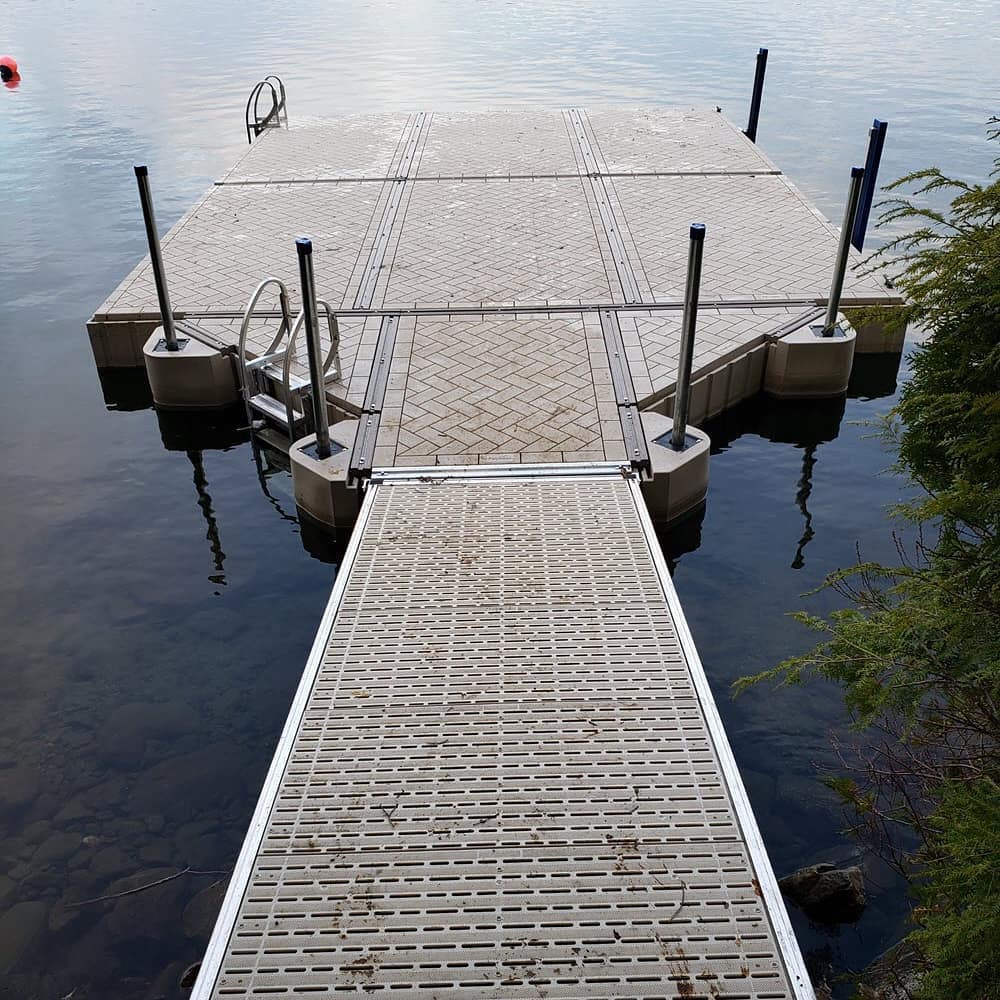
Large Pipe Bracket – Secures docks with 2″ galvanized pipe; adapts to water fluctuation.
Medium Pipe Bracket – Light-duty option for calm waters such as ponds and small lakes.
Rear Pipe Bracket (ShorePort) – Adds stability to single or multiple ShorePort PWC lifts.
Pipe Auger Kit – Anchors pipe directly into the bottom; durable and permanent.
Chain Anchors
Chain Anchor Plate – Excellent for deep water or shale bottoms; no protruding pipes or piles.
Chain Anchor Guide Bracket – Heavy-duty guide; popular for seaplane/floatplane moorings.
Stiff Arms
Light-Duty Stiff Arm – Anchors to seawalls, decks, or posts in calm water.
Heavy-Duty Stiff Arm – Built for marinas and municipal installations where bottom anchoring isn’t possible.
Flexi-Hinges
Flexi-Hinge (Pair) – Perpendicular attachment for connecting PolyDock/ShorePort to wood or metal floating docks.
Flexi-Hinge Parallel Mount – Mounts ShorePort alongside existing docks for convenient integration.
Proper anchoring works hand-in-hand with safe dock access and correct installation. Explore dock ramps and gangways for stable shoreline access, or view our floating dock installation guides for step-by-step setup resources.

Heavy-duty aluminum with roller system; perfect for marinas and tidal use.

Secures docks with 2″ galvanized pipe; adapts to water fluctuation.

Light-duty option for calm waters such as ponds and small lakes.

Adds stability to single or multiple ShorePort PWC lifts.
What’s the best way to anchor a floating dock in deep water?
Deep water or hard-bottom conditions often require a Chain Anchor Plate or Guide Bracket, which secure the dock without piles or pipes.
Can I use PolyDock anchoring with a seawall?
Yes. Stiff Arms connect directly to seawalls, decks, or shoreline abutments — ideal where bottom anchoring is restricted or prohibited.
Which anchoring works best in tidal or high-traffic areas?
Pile Hoops are the top choice for marinas and tidal conditions, providing smooth movement with water level changes while keeping docks secure.
Can I anchor a ShorePort jet ski lift the same way?
Yes. ShorePort anchoring integrates with many of the same systems — including Rear Pipe Brackets, Flexi-Hinges, and Pipe Brackets — to keep PWC lifts stable and aligned with your dock.
Will these anchoring systems work in saltwater?
Absolutely. All components are made from aluminum, stainless steel, and HDPE to withstand saltwater, brackish, and freshwater conditions.
Do I need special tools to install anchoring?
No. Most anchoring systems can be installed with standard tools, and your PolyDock dealer can provide professional installation if needed.
What type of dock anchor is best for my shoreline?
The best dock anchor depends on shoreline conditions, water depth, bottom composition, and seasonal water movement. Options such as pile hoops, chain anchors, or other anchoring systems are designed for different environments. A PolyDock dealer can help determine the right solution for your location.
Can floating dock anchors handle ice movement?
Yes. Many floating dock anchoring systems are designed to accommodate seasonal water level changes and ice movement. Anchor selection and proper installation are critical for performance in freeze-thaw conditions.
Do I need professional installation for dock anchoring?
Some anchoring systems can be installed by experienced homeowners, while others may require professional installation depending on site conditions. A PolyDock dealer can provide guidance on installation requirements and best practices.