Key Takeaways
PolyDock surfaces are designed to be easy to clean and maintain
Most stains can be removed with basic tools and mild cleaners
Proper spring cleaning restores appearance and extends dock life
Why Spring Cleaning Your PolyDock Matters
Spring cleaning your PolyDock is the best way to take stock of your dock system before the peak boating season kicks into high gear.
Here are the primary benefits of pre-season plastic dock maintenance:
Mitigates Slip Hazards: A quick wash clears away algae and mold that thrive in damp spring air, reducing slip hazards and keeping your dock safe for family and friends.
Ensures Hardware Integrity: A thorough PolyDock cleaning allows you to inspect connection and anchoring points, which can experience wear from winter waves or ice expansion. Rinsing away accumulated grime and bird droppings makes it easy to ensure every bolt is tight and every coupler is secure.
Protects Your Boat’s Hull: A dirty dock transfers grit and sand onto your boat's hull. When the boat moves against the dock, that grit acts like sandpaper, scratching your gelcoat.
Ultimately, being mindful of spring floating dock maintenance ensures everything is safe, secure, and ready for a busy summer season.
What Makes PolyDock Easy to Clean
Each PolyDock section is constructed from rotationally molded high‑density polyethylene (RotoMold USA, n.d.). Unlike wood, which absorbs water, oils, and organic matter, PolyDock’s non‑porous surface keeps spills—whether fuel, fish blood, or everyday grime—sitting on top. That means they can be quickly rinsed or wiped away, rather than soaking in and leaving stains.
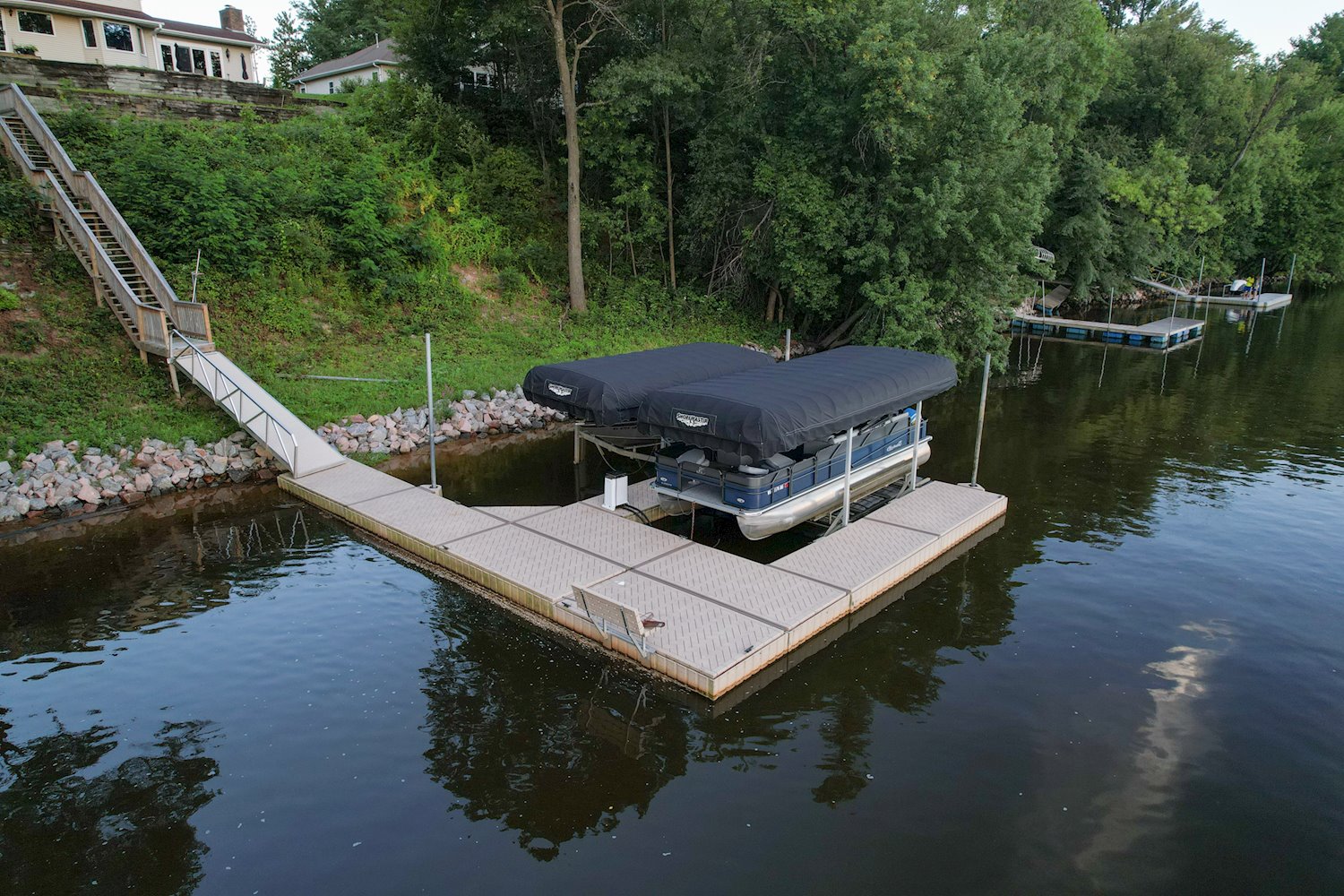
Moreover, the dock’s herringbone brick pattern is engineered to efficiently direct water runoff. In addition to reducing trip hazards in wet or icy conditions, this design allows owners to use a pressure washer in its low setting to clean the entire surface in minutes, without worrying about splintering boards or stripping away stains and sealants.
Step 1: Clear and Prep the Dock Surface
Start by removing all dock accessories such as ladders, benches, or watersport racks. This gives you a clear surface to work with while allowing you to clean and inspect accessories individually. Use a fine-sweep push broom (or soft-bristle brush) to clear away loose debris, sticks, leaves, or anything the wind and water may have carried on deck.
While sweeping, pay special attention to the connection points between sections. Clearing out any wedged-in organic matter now prevents it from holding moisture against your hardware later in the season.
Step 2: Power Washing Your PolyDock
Power washing is the fastest way to restore your dock’s original luster. Because polyethylene is so durable, you can deep-clean the entire system in a fraction of the time it takes to scrub a wooden deck.
Here are a few tips:
Use a Medium Setting: Set your pressure washer to a "medium" range (typically between 1500–2000 PSI). This setting provides more than enough power to lift stubborn algae and dried-on grime without putting undue stress on the dock material.
Work with the Texture: Wash in sections, following the herringbone brick pattern's lines. This allows water to naturally channel debris toward the edges of the dock. Use a steady, sweeping motion to lift dirt evenly.
Optimize Your Coverage: Keep the nozzle about 12 to 18 inches away from the surface. This distance allows the spray fan to cover more ground while still providing enough force to blast away organic buildup.
For best results, start at one end and move methodically across the dock. If you notice stubborn spots, pause and give them a few extra passes rather than cranking up the pressure.
Removing Common Stains
If the initial power washing doesn’t remove dark spots, mix warm water with a small amount of mild dish soap. Scrub with a soft-bristle brush or non-abrasive pad, then rinse thoroughly. For more stubborn spots, a diluted white vinegar solution can help break down organic growth, such as algae, mildew, bird droppings, fish blood, or bait stains. For remaining faint marks, apply a diluted baking soda paste, let it sit for a few minutes, scrub lightly, and rinse clean.
We recommend conducting your plastic dock maintenance on a cooler, overcast morning. This prevents cleaning solutions from drying too quickly, giving them more time to lift the stains before rinsing.
What to Avoid When Cleaning PolyDock
A good rule of thumb is: if you wouldn’t want to swim in it, don’t use it on your dock. Apart from being unnecessary for dock stain removal on a non-porous surface like high-density polyethylene, strong acids, chlorine-heavy solutions, or solvent-based products can harm the marine ecosystem (WorldRise, 2024).
Avoid using steel wool, wire brushes, or aggressive scouring pads, as these can create microscopic scratches that actually trap more dirt and marine growth over time.
Accessories That Help Keep Docks Cleaner
A clean dock is an organized one. Consider enhancing your waterfront with the following PolyDock accessories to keep the walking surface clear of the debris and gear that often trap dirt and moisture:
Watersport Racks: Designed to fit any board style, PolyDock’s Stand-Up Paddle Board Racks keep equipment elevated and off the walking surface, allowing air to circulate and water to drain properly.
Dock Bumpers: When boats rub directly against the dock, they can leave scuff marks and transfer dirt onto the surface. Dock bumpers create a protective buffer that reduces friction, helping prevent streaks while protecting both your dock and your boat’s hull.
Cleats: Loose mooring lines stretched across the dock not only create tripping hazards — they also drag dirt and sand across the surface. Properly installed cleats keep lines secured at the perimeter, reducing rope scuffing and keeping your walking areas clear.
Enter your zip code in the dealer locator tool below to get a list of authorized PolyDock partners near you, and explore other accessories that can enhance the functionality, convenience, and safety of your waterfront system.
How Often Should You Clean a PolyDock?
For most owners, one power washing and stain removal session per season is usually sufficient to keep PolyDock looking good throughout summer. However, it’s always wise to spot clean as needed. Don’t let fish blood, bait stains, fuel spills, or bird droppings sit for weeks in the sun. A quick rinse or light scrub when messes happen makes dock stain removal fast and prevents unnecessary buildup.
We also recommend a quick end-of-season rinse before temperatures drop to reduce tannin buildup from fallen leaves or lake minerals. By rinsing away the summer’s grime before winter sets in, you’ll find that next year’s spring cleaning is even faster, leaving you more time to enjoy the first warm days of the season.
For more offseason maintenance tips, read our blog on leaving a floating dock in winter.
FAQs
Can I power wash a PolyDock?
Yes, power washing is one of the most efficient ways to maintain your PolyDock. Because polyethylene is so durable, you can use a standard pressure washer on a medium setting (1500–2000 PSI) with a wide fan tip to quickly remove grime. Unlike wood, there’s no risk of splintering the surface or stripping away a delicate stain, making it a much faster process.
What cleaner is safe for plastic docks?
Mild household cleaners, such as dish soap and warm water, are usually all you need for plastic dock maintenance. For tougher organic buildup, a diluted white vinegar solution works well. Avoid harsh acids, solvent-based cleaners, or abrasive tools that aren’t necessary for routine cleaning.
Will stains permanently discolor a PolyDock?
It is very rare for a stain to permanently discolor a PolyDock because high-density polyethylene is non-porous, meaning liquids like fish blood or fuel sit on the surface rather than soaking in. While "baked-on" organic matter or leaf tannins can leave a temporary mark if left for a long time, these are usually easily lifted with a baking soda paste or a light power wash. Regular rinsing ensures your dock maintains its original color for years.
How do I remove algae from a floating dock?
Start with a power wash on a medium setting to lift surface growth. If needed, follow with a soft-bristle brush and a mild soap-and-water solution to break down remaining residue.
References:
RotoMold USA (n.d.). What is Rotational Molding?, https://rotomoldusa.com/rotomold/
WorldRise (November 12, 2024). Detergents and the ocean: what is their impact on the marine ecosystem?, https://worldrise.org/en/detergents-and-the-ocean-what-is-their-impact-on-the-marine-ecosystem/


