Key Takeaways
Mucky or silty bottoms make fixed docks unstable — floating systems stay level and require minimal upkeep.
PolyDock’s durable, sealed modules resist rot, rust, and algae buildup even in soft-bottom conditions.
Anchoring and gangway designs prevent tilt or drift on uneven, shifting lakebeds.
Perfect for lakes that freeze, flood, or fluctuate in depth.
Ideal for residential use, summer camps, or shallow-water properties.
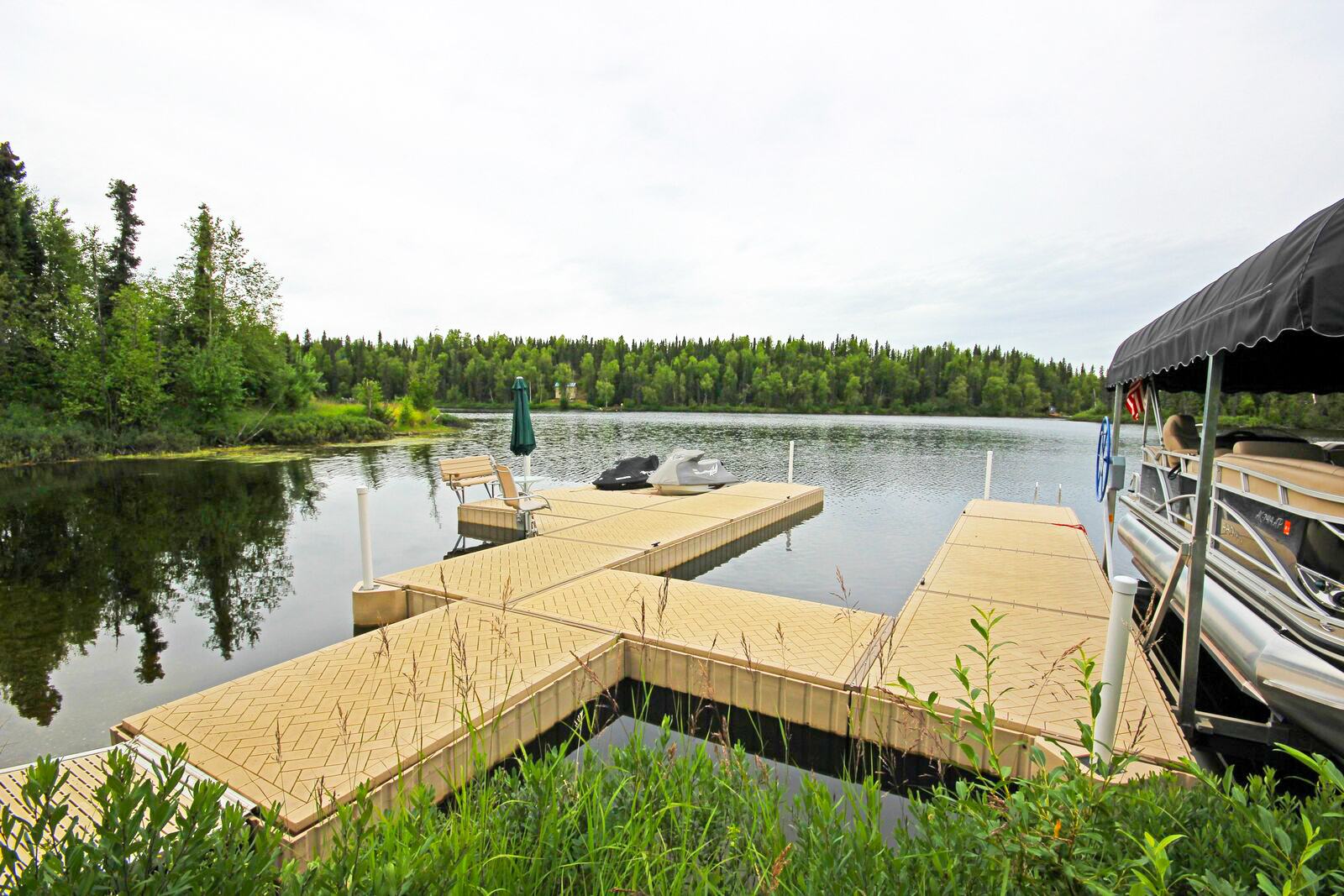
Why Soft or Mucky Lake Bottoms Need Floating Docks
Installing docks on mucky or silty lake bottoms is notoriously difficult because posts and pilings sink or shift in unstable ground.
Problems with fixed docks on unstable sediment.
Soft muck or silt doesn’t provide ample support, causing posts and pilings to sink or tilt over time. In some lakes, muck layers can be several feet deep. This makes it nearly impossible (or impractical) to reach solid ground with standard dock posts.
Even if you do find a workaround (using longer posts or larger plates), seasonal changes and water level fluctuations can lead to misaligned walking surfaces, stress on connectors, stability issues, and require frequent adjustments or repairs just to keep the dock usable.
Why floating platforms stay secure where pilings fail.
Floating docks eliminate many of these issues since they rest on the water surface, rather than relying on pilings driven to the lakebed for vertical support. Modern systems can be secured using various floating dock anchors tailored to the waterfront conditions.
This adaptability provides waterfront property owners with a reliable, low-maintenance floating dock system regardless of the installation challenges.
Water depth consistency and self-leveling explained.
The defining advantage of floating dock systems is their ability to remain level regardless of water level fluctuations, providing consistent access to boats, PWCs, or swimming areas without requiring manual adjustments. With floating docks, you don’t have to wade into the muck to crank up legs or re-level posts after a storm or seasonal water drop.
How PolyDock Excels in Soft-Bottom Environments
PolyDock was engineered to overcome the limitations of traditional docking systems. Its modular design allows you to create functional spaces for any shoreline, from residential floating docks to full-scale marinas, while its versatile range of anchoring solutions enables you to securely anchor the system regardless of the installation challenges.
Moreover, PolyDock sections are lightweight enough for two adults to lift and maneuver, turning what would otherwise be a major construction project into a manageable weekend task. This makes PolyDock one of the best floating docks for mucky lake bottoms.
Self-contained buoyancy keeps your platform above the muck.
The recessed areas molded into the underside of each PolyDock section trap air between the dock and the water surface. This suction-like effect minimizes movement while effectively enhancing the floating dock’s buoyancy, weight capacity, and stability (Brinson Marine, 2023).
Molded polyethylene modules resist corrosion and rot.
Each PolyDock section is made from rotationally molded high-density polyethylene (HDPE). Rotational molding involves heating powdered resin inside a mold while slowly rotating it along two axes, so the material evenly coats the interior walls and forms a seamless part (RotoMoldUSA, n.d.). This results in durable, hollow plastic structures with superior impact resistance that don’t crack, warp, or rot – making it the perfect material for floating dock systems.
Flexible connectors adjust to waves and depth changes.
PolyDock connectors span the seam of each section to lock them into a unified platform. This creates system-wide rigidity, ensuring your dock feels like a solid, single unit under your feet rather than a collection of bobbing rafts.
Anchoring & Installation Options
At PolyDock, we understand that each lake, river, or seabed can vary from location to location. That’s why we developed various anchoring systems, including chain anchor plates, stiff arms, and pipe brackets, ensuring you can install PolyDock regardless of shoreline conditions and local restrictions.
Anchoring methods for silty or deep-bottom areas.
For deep muck, chain anchor plates are often the best solution. These connect the floating dock to heavy concrete deadweights resting on the lakebed. The weights settle into the silt, using the suction of the muck itself to create a virtually immovable hold.
If the bottom is simply too unstable for any anchor, stiff arms allow you to secure the floating dock to a seawall, deck, post, or other abutments onshore.
How to prevent drift and maintain dock alignment.
PolyDock floating dock stabilizers, such as stiff arms, pipe brackets, and chain anchor plates, are designed to minimize lateral movement and prevent the dock from shifting. They act as a buffer, absorbing the shock from high winds and waves and distributing forces evenly to reduce stress on the dock’s structural components. These reinforcements ensure the dock remains level and balanced even in adverse weather conditions.
Authorized PolyDock dealers conduct a site assessment before floating dock installation to determine the optimal anchoring system tailored to the shoreline’s unique conditions.
Floating dock ramps and gangways for easy shore access.
Mucky lake bottoms often coincide with soft, marshy shorelines that make transitioning from land to dock tricky. To address this challenge, PolyDock offers ramps and gangways that seamlessly integrate with individual dock sections. Ramps are available in different sizes and decking options.
Ramps are ideal for shorelines with minimal water level fluctuations and distances less than eight feet. Meanwhile, a PolyDock floating dock gangway provides stable and safe access for steeper shorelines, longer spans, or lakes and rivers with variable conditions.
Low-Maintenance Design Details
PolyDock floating dock systems are built with ease of ownership at their core, combining resilient materials with thoughtful design features to provide waterfront property owners with a low-maintenance solution for the most challenging marine environments.
Non-slip surface, UV protection, and easy-clean texture.
PolyDock’s top surface features a herringbone brick pattern engineered for slip resistance and efficient water runoff, which helps prevent ice layering and reduces trip hazards in cold or wet conditions. We also infused our polyethylene resin with UV-8 inhibitors to prevent fading and brittleness from prolonged sun exposure.
Debris and algae resistance for long-term use.
Each PolyDock section is constructed from high-density polyethylene – a material that’s resistant to stains, algae growth, and surface degradation. Periodic cleaning with mild soap and freshwater is typically all that’s required to keep the system performing at its best, even in demanding marine environments.
Simple inspection and seasonal storage checklist.
Inspection Tips:
For routine cleaning, use a mild soap solution and a soft brush to remove dirt, debris, and marine growth. Avoid using pressure washers, as they can compromise the slip-resistant surface.
Conduct visual inspections at least monthly, and more frequently after severe weather events, checking for loose connections, cracks, and warping.
Inspect anchors quarterly, clearing silt buildup from weights and re-tensioning chains after storms.
Seasonal Storage Tips:
When storing your dock, ensure it’s on a flat surface with no risk of flooding.
If indoor storage isn’t an option, use a loosely weighted tarp to keep water from accumulating and freezing inside the sections.
Keep the system right side up, so the drain holes face downward. This prevents water buildup in the system.
Enter your zip code in the dealer locator tool below to get a list of dealers of floating docks for sale near you.
FAQs
What maintenance is required for a PolyDock system?
Basic maintenance for a PolyDock system primarily involves routine cleaning with mild soap and a soft brush, and conducting monthly visual inspections to check for any damage or loose connection points.
Can floating docks be left in the water over winter?
While we don’t usually recommend it, there’s a marina in Alaska that leaves its PolyDock sections in the water year-round. Ice can form under PolyDock sections without causing issues. However, ice floes will be a concern. When huge chunks of ice start flowing, they could ram the dock and potentially damage the dock sections.
How long do low-maintenance floating docks last?
A PolyDock floating dock system is engineered to last for decades. Many of the first docks manufactured in 1998 are still in use today.
References:
Brinson Marine (2023). Looking for Floating Dock? Why ShoreMaster Polydock might be the fit for you! https://www.youtube.com/watch?v=1D6s4oPm8zk&t=124s
RotoMoldUSA (n.d.) What is Rotational Molding? https://rotomoldusa.com/rotomold/#:~:text=Rotational%20molding%2C%20rotomolding%2C%20rotomold%20or,slowly%2C%20both%20vertically%20and%20horizontally


